Antonina Alexandrovna Gromeko
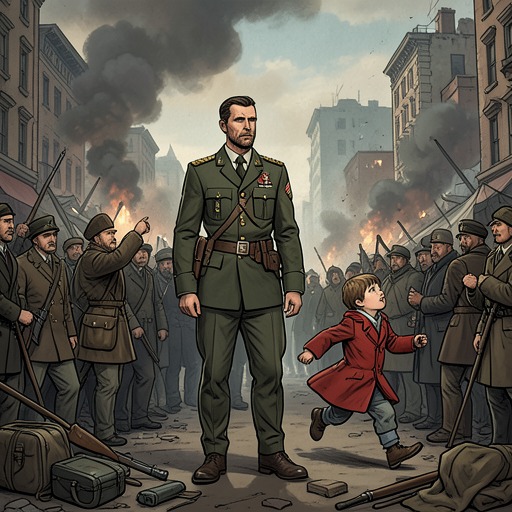
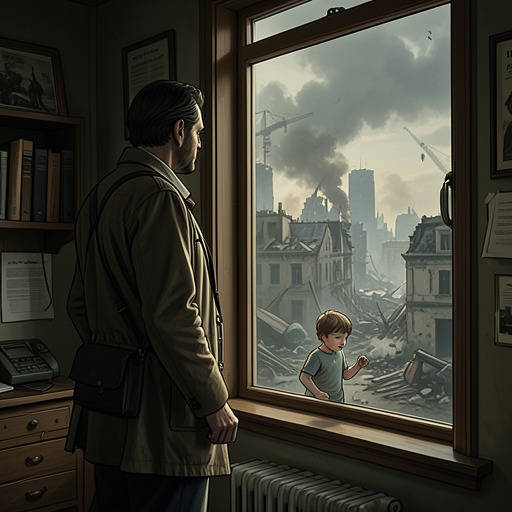
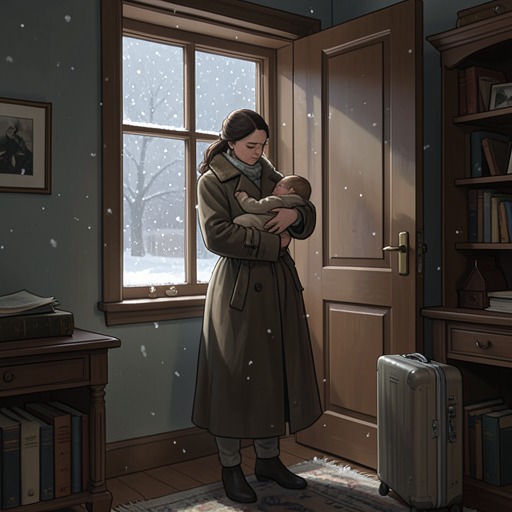
Doctor ZhivagoAntonina Alexandrovna Gromeko is the daughter of chemistry professor Alexander Alexandrovich Gromeko and Anna Ivanovna, and the childhood companion who becomes Yurii Andreievich Zhivago’s wife. Raised in a cultivated household where music, family life, and learning shape the young people around her, Tonia is initially so familiar to Yurii that he takes her for granted. Her mother’s deathbed appeal that the two stay together and marry makes that familiarity newly legible: the established bond becomes the beginning of passion.
Identity and Family
Tonia is the daughter of Alexander Alexandrovich Gromeko, a professor of chemistry, and Anna Ivanovna, whose father was the landowner and ironmaster Ivan Ernestovich Krueger. The family’s substantial house stands at the corner of Sivtsev Vrazhok and another small street. Its upper floor contains the bedrooms, schoolroom, Alexander’s study and library, Anna’s boudoir, and rooms for Tonia and Yurii; the ground floor is reserved for receptions. The arrangement places study and private family life above a public world of hospitality and music.
The Gromekos’ household is presented through its cultivated habits as much as its rooms. The family is hospitable and deeply devoted to music, often holding receptions and evenings of chamber music with piano trios, violin sonatas, and string quartets. Its ground floor, with pistachio-colored curtains, a gleaming piano, an aquarium, olive-green upholstery, and potted plants, is likened to a green, sleepily swaying seabed. This domestic setting supplies the atmosphere in which Tonia’s friendship with Yurii develops over years, before either recognizes it as love.
Childhood and Companionship
As young people, Yurii and Misha Gordon live with the Gromekos. Tonia is Yurii’s age, and the three form a close household circle: Misha is Yurii’s friend and classmate, while Tonia is the companion who shares his home and daily life. Their connection is not introduced as a sudden romance but as a long familiarity embedded in family routines.
After Nikolai Nikolaievich Vedeniapin leaves Yura in Moscow, the boy is first placed with a relative who fails to care for him properly; he is then transferred to the Gromekos and remains with them. Vedeniapin regards their home as an eminently suitable atmosphere for his nephew. The household thus becomes both Yurii’s refuge and the setting where his later marriage to Tonia takes root. Her place in his life precedes any conscious declaration: she is the known, trusted presence whose very familiarity initially obscures her distinctness.
Anna Ivanovna’s Deathbed Appeal
When Anna Ivanovna suffers a prolonged coughing fit, Tonia and Yurii hurry to her bedside at the same moment and stand shoulder to shoulder. Their hands touch. Still coughing, Anna takes both hands and keeps them joined for a while. Once able to speak, she tells them that if she dies they should stay together and marry, declaring them engaged before bursting into tears. The gesture and blessing turn an intimate family scene into a decisive threshold in their relationship.
The appeal does not create their closeness from nothing; it gives the longstanding bond a future and a name. Anna’s words make explicit what the young people have not yet understood, while the physical joining of their hands gives the declaration a concrete form. Her wish is at once a mother’s last request and an interpretation of the relationship she has watched develop in her household.
A Familiar Friend Seen Anew
A few months later, as Tonia and Yurii travel by hired sleigh to the Sventitskys’ Christmas party, the bedside scene has transformed their perception of one another. After six years of late childhood and early adolescence in the same house, they know each other’s habits and even share a private way of snorting at one another’s jokes. On the journey, however, they ride mostly in silence, each absorbed in separate thoughts until those thoughts converge on their altered relationship.
For Yurii, Tonia has been the old friend who could be taken for granted and seemed to need no explanation. Now she appears to him as an inaccessible and complicated person, and he recognizes that she has become a woman. He imagines himself in roles of power and public distinction—as an emperor, hero, prophet, or conqueror—but cannot imagine himself as a woman. His attention to Tonia’s new, adult identity therefore carries both wonder and a recognition of how little his former familiarity had allowed him to see.
The passage presents the beginning of passion as a change in perception rather than a change in Tonia herself. Yurii is moved by the difficult responsibility he imagines her taking on, and feels an ardent sympathy and timid wonder. The long-established companion becomes, in his eyes, an other whose inner life cannot be reduced to shared habits. Anna’s blessing has opened that possibility, but the feeling that follows belongs to the young people’s own newly awakened recognition.
Narrative Significance
Tonia’s early characterization is rooted in domestic continuity: she belongs to a family whose intellectual and musical culture shelters Yurii, and she has shared his everyday life long enough to seem self-evident. The narrative then turns that continuity into a source of discovery. Her importance to Yurii is first expressed through the familiarity he has failed to examine; only after Anna’s deathbed intervention does he begin to apprehend the complexity of the person beside him.
The episode also gives the household’s emotional life a distinct, material form. Anna’s hands joining Tonia’s and Yurii’s, followed by their silent sleigh ride through the cold toward a Christmas party, links a final maternal wish to the young couple’s first stirring awareness. Tonia’s early story is therefore not simply that of a childhood friend selected for marriage: it is a movement from shared home and habitual intimacy toward recognition, sympathy, and the beginning of love.